

Before you start the License to Carry process, find out whether you can qualify. This is the part where careful wording matters. Personal situations differ, and the answer is not always simple.
Quick answer: Texas LTC eligibility comes from current state and federal law. Read the official Texas DPS eligibility information before you apply. First Shot Training teaches and links students to the online classroom portion. It cannot decide whether you qualify, promise approval, or give legal advice.
Why Eligibility Should Be Reviewed Early
Checking early saves time, money, and disappointment. Texas DPS lists the state and federal rules that apply. It is on you to read them and see whether any of them touch your situation.
First Shot Training Does Not Decide Who Qualifies
A training provider can teach the classroom material, explain how the process works, and point you to official resources. It cannot judge how the law applies to your own history. It cannot promise that DPS will approve you. DPS alone decides that.
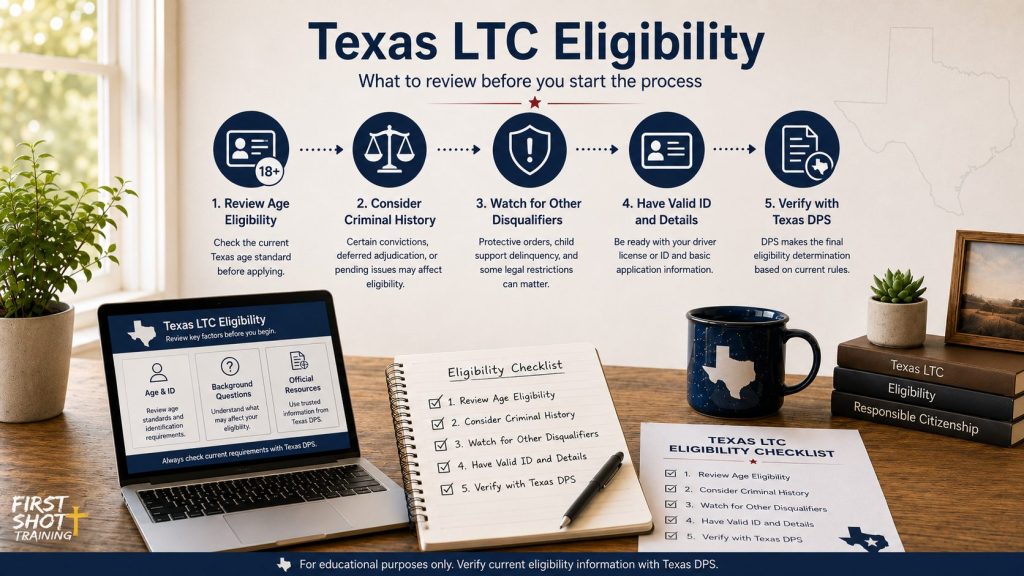
Topics That May Require Extra Attention
Eligibility questions often involve criminal history, protective orders, certain substance related issues, and mental health related restrictions. Residency or lawful presence matters too. So do federal rules that bar a person from having a firearm. Other legal factors can apply. This is not a full legal checklist. Treat it as a prompt to read the official sources closely.
What to Do If You Are Unsure
If you are not sure whether something in your background affects eligibility, do not guess. Read the Texas DPS resources. Consider speaking with a qualified attorney licensed in your jurisdiction. That is worth doing before you spend money on training. A social media comment or an old article is not a reliable answer.
When you are ready to move from research to action, First Shot Training can help you begin online.
Why No One Should Promise Approval
No course provider should promise that you will be approved. DPS and the law decide the outcome. Honest teaching means saying so up front, not after you have paid.
How the Online Class Fits Into the Process
The Online Texas LTC Class covers the classroom portion. It does not replace the DPS application, fingerprinting, supporting documents, the background check DPS runs, or the proficiency demonstration.
A Responsible Next Step
Start with the official eligibility resources. If they leave you with a real doubt, settle that question first. If you are clear to move ahead, begin the online classroom portion and keep following the DPS instructions.
Frequently Asked Questions
Can First Shot Training tell me if I qualify for a Texas LTC?
No. First Shot Training provides education and cannot make personal eligibility determinations or provide legal advice.
Can a course provider guarantee Texas LTC approval?
No. No responsible provider should guarantee approval. DPS and the law that applies to your case decide the outcome.
Where should I check eligibility?
Start with official Texas DPS eligibility information and the legal references DPS provides.
Should I take the class if I am unsure about eligibility?
That depends on your situation. If you have a real question about your background, look for the answer before you spend money on training. Review the official sources and consider legal counsel first.
Disclaimer: The information provided in this article is for general educational and informational purposes only and should not be considered legal advice. First Shot Training is not a law firm and does not provide legal advice. While we make every reasonable effort to ensure the information we publish is accurate and up to date at the time of publication, laws, regulations, licensing requirements, reciprocity agreements, and government policies may change without notice. You are responsible for verifying current information with official government sources before relying on any information contained in this article. If you have questions regarding how the law applies to your specific circumstances, consult a qualified attorney licensed in your jurisdiction.